


Mini reviews
MM Esser, Immunology Unit National Health Laboratory Service Tygerberg, Division Medical Microbiology, Department of Pathology, Stellenbosch University, Cape Town, South Africa
Introduction :
Transient hypogammaglobulinaemia of infancy (THI) which affects infants and young children, is a relatively frequent primary immunodeficiency. It was first described as a clinical entity by Gitlin and Janeway.1Normal newborn infants rely on passively transferred maternal immunoglobulins in the first 3-6 months of life, when they reach a nadir of immunoglobulin G (IgG),until sufficient production of their own antibodies. Serum immunoglobulin A (IgA) may be variably low, immunoglobulin M (IgM) levels are very rarely reduced and B cell numbers are normal. (Figure 1) Antibody responses to protein immunizations arenormal or near normal.
Mr Esser, Immunology Unit National Health Laboratory Service Tygerberg, Medical Microbiology Division, Department of Pathology, Stellenbosch University, Cape Town, South Africa
Traduit par L. Jeddane (Maroc)
Introduction:
L’hypogammaglobulinémie transitoire de l’enfance (THI), qui touche les nourrissons et les jeunes enfants, est une immunodéficience primaire relativement fréquente. Elle a d'abord été décrite comme une entité clinique par Gitlin et Janeway1. Les nouveau-nés comptent généralement sur les immunoglobulines maternelles passivement transférés dans les 3-6 premiers mois de la vie, où ils atteignent un nadir de l'immunoglobuline G (IgG), jusqu'à la production suffisante de leurs propres anticorps. L’immunoglobuline A (IgA) sérique peut être variable faible, le taux des immunoglobulines M (IgM) est très rarement réduit et le nombre de cellules B est normal (Figure 1). Les réponses immunitaires à la vaccination des protéines sont normales ou proches de la normale.
Alao MJ, Jeddane L, Bousfiha AA.
Introduction
Pediatric morbidity and mortality in Africa is still characterized by infectious diseases and malnutrition. Both of them cross on immunodeficiency diseases. HIV infection is predominant but besides, there are few cases with severe infections, sometimes opportunistic, in patient with significant failure to thrive and a negative HIV testing. It is compulsory in such situation to evoke a primary immunodeficiency (PID) and try by all means to confirm the diagnosis. The ASID can help. Here, we present two cases that evoke PID even though the precise diagnosis is difficult in our context.
Alao MJ, Jeddane L, Bousfiha AA.
Introduction
La morbidité et la mortalité infantile en Afrique est encore marquée par les maladies infectieuses et la malnutrition. Au carrefour de ces deux grands groupes d’affections se trouvent aujourd’hui les déficits immunitaires. L’infection à VIH y est prépondérante mais à coté, se trouvent quelques cas avec des infections sévères, parfois opportuniste sur une dénutrition importante et une sérologie VHI négative. Il faut dans ces cas évoquer un déficit immunitaire primitif (DIP) et tenter de le confirmer. L’ASID peut aider dans ce sens. Nous présentons ici deux observations qui font évoquer un DIP même si le diagnostic précis reste difficile.
Jeddane L, Bousfiha AA, Esser M
For the African Society for Immunodeficiencies (ASID).
Introduction: The African Society for Immunodeficiencies (ASID) is now 7 years-old and gathers more and more members. Founded in 2008 in Casablanca, ASID established several objectives: to create an African network for Primary Immunodeficiencies (PID), to raise PID awareness in Africa among physicians and stakeholders and to improve PID diagnosis and management.
Jeddane L, Bousfiha AA, Esser M
Pour l’African Society for Immunodeficiencies (ASID).
Introduction: L’African Society for Immunodeficiencies (ASID) a maintenant 7 ans et rassemble de plus en plus de membres. Fondée en 2008 à Casablanca, ASID a établi plusieurs objectifs: créer un réseau africain pour les déficits immunitaires primitifs (DIP), sensibiliser les médecins et les intervenants de la santé sur les DIP en Afrique et améliorer le diagnostic et la prise en charge des DIP en Afrique.
Fethi MELLOULI, Registry National Center for Bone Marrow of Tunis. Tunisia.
Translated by Jeddane L (Morocco)
Primary immunodeficiencies (PID) are a large family of 200 diseases of which 176 are currently characterized genetically. [1] Polyvalent immunoglobulins are prominent in their care. They are the cure of the predominant antibody deficiencies. What are the main forms of immunoglobulins?How to administrate them? How effective are they? What are the main complications associated with their use? And how to fix it?
Fethi MELLOULI, Centre National de Greffe de Moelle Osseuse de Tunis. Tunisie.
Les déficits immunitaires primitifs (DIP), sont une grande famille de 200 maladies dont 176 sont actuellement caractérisées sur le plan génétique [1]. Les immunoglobulines polyvalentes occupent une place importante dans leur prise en charge. Elles constituent le traitement curatif des déficits prédominants en anticorps. Quelles sont les principales formes d’immunoglobulines ? Quelles sont leurs modalités d’administration ? Quelle est leur efficacité ? Quelles sont les principales complications liées à leur utilisation ? Et comment y remédier ?
Reem Elfeky1,2
1-Lecturer of Paediatrics, Ain Shams University, Cairo Egypt.
2-Fellow in Paediatric Immunology/Allergy, the Great North Children’s Hospital, the UK
Traduit par Dr L Jeddane (Maroc)
Des défauts génétiques sont la cause des déficits immunitaires primitifs (DIP), lesquels prédisposent aux infections.
Reem Elfeky1,2
1-Lecturer of Paediatrics, Ain Shams University, Cairo Egypt.
2-Fellow in Paediatric Immunology/Allergy, the Great North Children’s Hospital, the UK
Genetic defects cause primary immune deficiency (PID), which predispose to infections.
Jeddane L. Ailal F.
Clinical Immunology Unit, Pediatric Infectious Department. A. Harouchi Children Hospital, Ibn Rochd Hospital. King Hassan II University. Casablanca, Morocco.
Signal Transducers and Activators of Transcription (STATs) is a superfamily of proteins that play essential roles in development, proliferation and immune defense. The first one to be described in 1989, STAT1, is a key transcription factor mediating interferon (IFN)-α/β signaling [1]. STAT1 is also involved in IFN-γ and other cytokines signaling pathway [1]. Mutations in this gene result in four different clinical phenotypes: complete or partial AR deficiencies leads to susceptibility to intramacrophagic bacterial and viral disease, AD loss-of-function (LOF) deficiency exposes to mycobacterial disease, and AD gain-of-function (GOF) is characterized by candidiasis and auto-immunity [2]. We will see in this mini-review, the epidemiology, the pathogenesis of this deficit and the main clinical manifestations of the four phenotypes.
Login


Partners


Visitors Counter


 | Today | 87 |
 | Yesterday | 201 |
 | This Week | 288 |
 | This Month | 7316 |
 | All Days | 955457 |
HONcode
 This site complies with the HONcode standard for trustworthy health information:
verify here.



 Rwanda
 Cameroun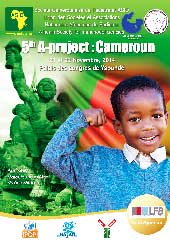
 Zambia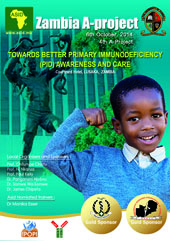
 Gabon
Gabon
 Sudan
Sudan
 Benin
Benin


